
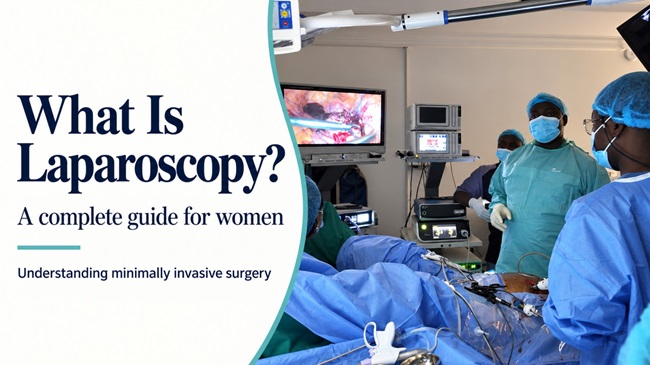
What Is Laparoscopy? Complete Guide to Laparoscopic Surgery
What Is Laparoscopy?
If your gynaecologist has recommended a laparoscopy, you may have questions about pain, scars, recovery and whether it can help with fertility or pelvic problems.
Laparoscopy is a form of minimally invasive (keyhole) surgery. Instead of a large abdominal incision, the surgeon uses small cuts and a thin camera called a laparoscope to examine the organs inside the abdomen and pelvis. When needed, additional small instruments can be inserted to treat problems.
In gynaecology it is used to investigate and, where appropriate, treat conditions involving the uterus, fallopian tubes, ovaries and surrounding structures. It is not automatically right for every woman — the decision depends on your symptoms, history, examination and imaging.
Diagnostic vs Operative Laparoscopy
Diagnostic laparoscopy examines the pelvic and abdominal organs to help find the cause of symptoms or a suspected condition (for example endometriosis, adhesions, chronic pelvic pain, certain ovarian masses or tubal problems). A biopsy may sometimes be taken.
Operative laparoscopy allows the surgeon both to look and to treat during the same procedure. This may include treating endometriosis, removing selected ovarian cysts, dividing adhesions, treating ectopic pregnancy, or performing certain fibroid procedures — depending on the findings and prior consent.
One advantage of laparoscopy is that diagnosis and treatment can sometimes be combined in one operation.
Why Might a Woman Need a Laparoscopy?
Common reasons include:
- Endometriosis — Laparoscopy can diagnose and treat it, but it is no longer an automatic first step. Current ESHRE guidance favours an individualised approach using symptoms, imaging and previous treatment. Laparoscopy is considered when imaging is negative or empirical treatment has not helped.
- Ovarian cysts — Many resolve on their own. Selected cysts may need laparoscopic removal.
- Fibroids — Some can be treated laparoscopically depending on size, number and location.
- Pelvic adhesions — Can cause pain or fertility issues and may be divided laparoscopically.
- Certain fertility concerns — Laparoscopy is not a routine test for every woman with infertility. ASRM recommends starting with less invasive investigations. It is reserved for cases with suspected pelvic pathology (e.g. endometriosis or significant disease).
How Is It Performed?
- General anaesthesia (you are asleep).
- A small incision is usually made near the belly button.
- Carbon dioxide gas gently expands the abdomen to create working space.
- The laparoscope is inserted and projects magnified images onto a screen.
- Additional small incisions may be made if treatment is needed.
- The surgeon examines and treats as planned.
Incisions are small, so scars are usually much smaller than with open surgery, although they do not always disappear completely.
Benefits and Risks
Possible benefits (in suitable patients): smaller scars, less pain, shorter hospital stay, faster recovery and earlier return to normal activities. Many simpler procedures can be done as day cases.
Risks (uncommon but possible): bleeding, infection, injury to blood vessels or nearby organs (bowel, bladder, ureters), blood clots, hernia at an incision site, and anaesthetic complications. Sometimes the surgeon needs to convert to open surgery for safety.
Your surgeon should discuss the benefits, risks and alternatives with you beforehand.
Recovery and When to Seek Help
Common after-effects include tiredness, mild-to-moderate abdominal discomfort, tenderness at incision sites, bloating and temporary shoulder-tip pain (from the gas).
Many diagnostic procedures allow same-day discharge. Return to work is often within 1–3 weeks, depending on the procedure and your job. Always follow your surgeon’s specific advice.
Contact your team promptly for: fever, increasing or severe pain, heavy vaginal bleeding, persistent vomiting, redness/swelling/discharge from an incision, difficulty passing urine, significant swelling, leg pain/swelling, or shortness of breath/chest pain. Seek emergency care for severe breathing difficulty or chest pain.
Is Laparoscopy Right for You?
Only a qualified doctor can decide after assessing your individual situation. It is a valuable tool but not needed for every woman with pelvic pain, infertility, fibroids, cysts or suspected endometriosis. Factors considered include symptoms, history, examination, imaging, previous treatments, fertility goals, age, general health, and alternative options.
Frequently Asked Questions
Is it painful? You are under anaesthesia during the operation. Some discomfort, tiredness and shoulder pain are common afterwards.
How long does it take? A simple diagnostic laparoscopy may take 30–60 minutes; more complex surgery takes longer.
Can I go home the same day? Often yes for diagnostic or minor procedures; more complex cases may need an overnight stay.
Can it help with infertility or endometriosis? Yes in selected cases with suspected pelvic problems, but it is not routine for unexplained infertility and is not the automatic first step for endometriosis.
Is it better than open surgery? For many appropriate procedures it offers smaller scars, less pain and faster recovery, but it is not suitable for every patient or condition.
Final Thoughts
Laparoscopy has transformed how many gynaecological conditions are investigated and treated, often with less disruption than traditional open surgery. The key question is not “Can it be done?” but “Is it the right option for me?”
That decision should be made with a qualified gynaecologist or fertility specialist after a proper assessment.
Could You Benefit From a Gynaecological Assessment?
If you have persistent pelvic pain, suspected endometriosis, fibroids, ovarian cysts, fertility concerns, or have been advised to consider laparoscopy, a specialist assessment can help determine the best next step.
At Procare Hospital, Abuja, patients can discuss their symptoms and options with an appropriate specialist and receive an individualised care plan.
Book an appointment with Procare Hospital to discuss your concerns.
Medical Disclaimer This article is for general educational purposes only and does not replace individual medical advice, diagnosis or treatment. The need for laparoscopy, the type of procedure and expected recovery vary from patient to patient. Always discuss your specific circumstances with a qualified healthcare professional.